
How to Photograph Waterfalls at Ricketts Glen
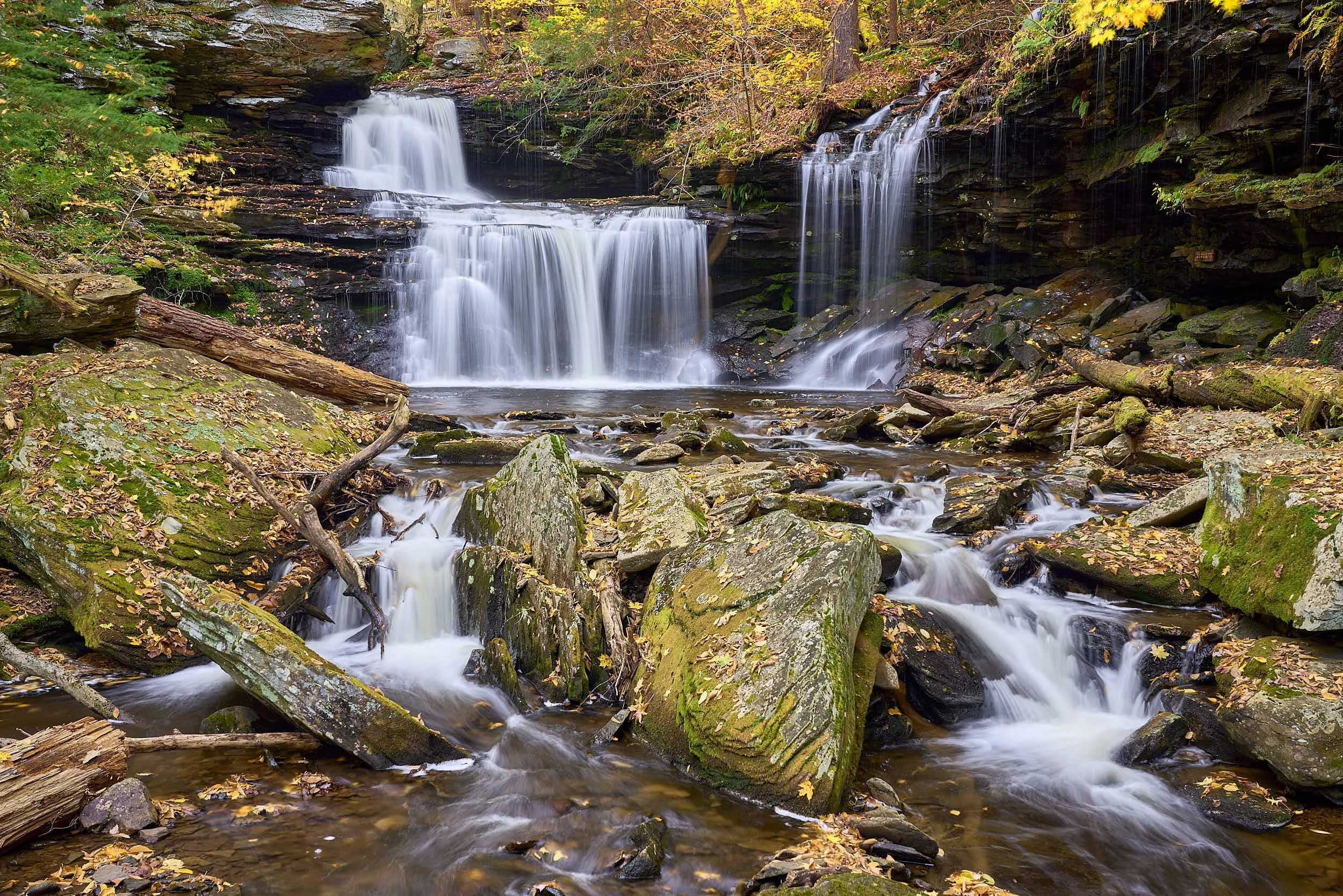
R. B. Ricketts Falls: Ricketts Glen State Park, Benton, Pa.
Ricketts Glen is one of Pennsylvania’s most rewarding waterfall locations, offering more than 20 named falls along a rugged, forested gorge. The combination of dense canopy, layered bedrock, and flowing water makes it an ideal place to practice long‑exposure waterfall photography.
This guide covers the conditions and camera settings from a mid‑afternoon, early‑fall shoot when water flow was moderate, and the sky was slightly overcast.
1. Conditions: Why They Worked
Understanding the conditions helps you repeat (or adapt) the experience:
Early Fall
Leaves begin to show color, providing contrast and texture to the green back drop that dominates during the summer months.
The Falls Trail has soft, even light due to heavy leaf cover.
Water flow is often moderate — ideal for smooth-but-textured long exposures.
Moderate Water Flow
Strong enough to give definition to the falls
Not so powerful that it turns into pure white foam during long exposures
Good for layered compositions that show rock texture
Mid‑Afternoon, Slightly Cloudy (Clouds can be your ally, acting like a big soft box diffusing the sun)
Clouds act as a natural diffuser
Helps to reduce harsh highlights on wet rock
Can allow for longer shutter speeds, reducing the possibility of overexposing your image
Produces soft, calm images.
Tip: If the sun comes out, wait for passing clouds to act as a soft box, diffusing the harshness of the sun.
2. Recommended Gear (This is based on the gear that I own.)
✔ Full‑frame camera
Provides strong dynamic range in dim forest light.
✔ 24–105mm f/4 lens
24-105mm: covers a good range when super wide or telephoto is not required
A 16-35mm or 28-70 could be used to get the same shots
Use a 70-200mm to pick out intimate details
✔ Circular Polarizer (CPL)
cuts glare on wet rocks
deepens colors in foliage
reveals detail in the water
reduces the amount of light entering the lens, allowing for longer shutter speeds
Tip: In extremely bright conditions, think clear day at noon, a Neutral Density (ND) filter may be needed to achieve the desired shutter speed.
✔ Sturdy Tripod
Critical for exposures longer than 1/4 second — especially on uneven terrain.
Pro tip: Spread your tripod wide and place feet on dry, flat rock whenever possible.
3. Camera Settings (For above image)
Shutter Speed: 0.8 seconds
Smooths the water
Maintains texture
Avoids “milky fog” effect or total white-out
Slower (1–2 seconds) works too, but you lose some definition in moderate flow.
Aperture: f/9
Wide enough to let in adequate mid‑afternoon light
Narrow enough for front‑to‑back sharpness
Excellent balance for maximizing clarity in foliage and rock textures
Focal Length: 37mm
At ~35–40mm you can:
flatten depth slightly
emphasize flow direction
avoid ultrawide distortion
simplify busy scenes
ISO: 100 (Base ISO for my camera)
Use the lowest ISO possible to maximize dynamic range.
White Balance: Auto
If necessary, I adjust during editing
4. Field Technique
Look for Stable Compositions
Many Ricketts Glen waterfalls have:
foreground rocks
mid‑flow cascades
background cliffs or trees
Use the Circular Polarizer (CPL) intentionally
Rotate until:
glare disappears from wet rocks
water becomes more transparent
colors deepen
Avoid rotating too far — over‑polarizing makes water look unnaturally dark.
Mind the Mist
Remember, you are near a waterfall. Waterfalls generate fine mist that can coat your lens.
Wipe gently between shots.
5. Safety & Trail Notes
Ricketts Glen is beautiful but rugged.
Be aware of:
wet, slippery stone
rushing water
steep, uneven footing
limited cell service
Hike with shoes that grip well and keep gear easy to handle when moving between spots.
6. When to Visit for Best Results
Overcast days (top choice)
Early fall (consistent water flow + color)
Late spring (lush greens + higher flow)
Avoid mid‑day sun unless you’re deep in the gorge
7. Final Thoughts
Ricketts Glen rewards patience and attention to detail.
With soft light, a circular polarizer, and modest shutter speeds in the 0.5–1 second range, you can create photographs with beautiful tone, texture, and clarity.